Image created using advanced AI technology, professionally refined by the PornPlanner editorial team.
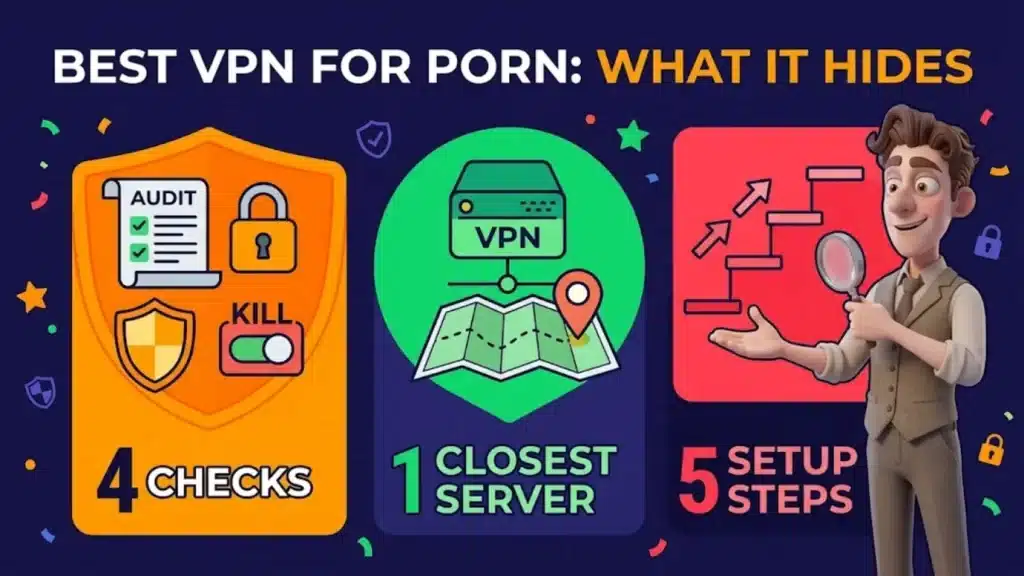
The best VPN for porn is the one that proves what it promises. Here is what a VPN hides and what stays visible, the 4 things its own pages should prove, which server to pick, what to check on a free VPN and how to set one up and use it in 5 steps.
4
Checks Per VPN
1
Closest Server
5
Free VPN Risks
5
Steps to Set Up and Use
Section 01
What does a VPN hide when you watch porn?
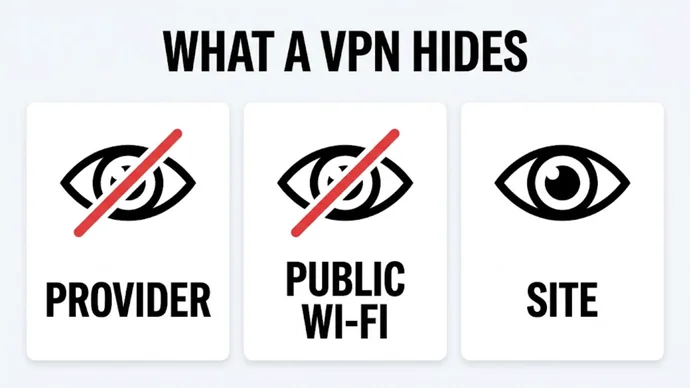
A VPN hides the content of your traffic from your internet provider and from public Wi-Fi, and it moves your trust to the VPN company. That is how the FTC describes what a VPN typically does.
Quick Definition
A VPN is an app that sends your internet traffic through the VPN company's servers. Your provider sees a connection to the VPN, the VPN company carries the traffic, and the site you open sees the VPN's server instead of your home connection.
A VPN is not anonymity. The FTC says a VPN app generally will not make you entirely anonymous, and a site can still detect VPN use and recognize you through what you give it directly, such as an account email. The history your browser saves on your own device is a separate matter, and what incognito mode deletes when you close it covers that side.
This table sorts who sees what once a VPN is on, using the FTC's description of what a VPN does.
Who or what
What a VPN changes
Your internet provider
It typically can no longer see the content of your traffic
Public Wi-Fi
The network owner typically can no longer see the content either
The VPN company
It carries your traffic, so you trust it instead of your provider
The site you open
It can still detect VPN use and recognize you through what you share, such as an account email
Your device and browser
A VPN works on the connection, so history and downloaded files on the device stay as they are
What a VPN hides from your provider and public Wi-Fi, and what the site still sees
Section 02
What should a VPN's own pages prove?
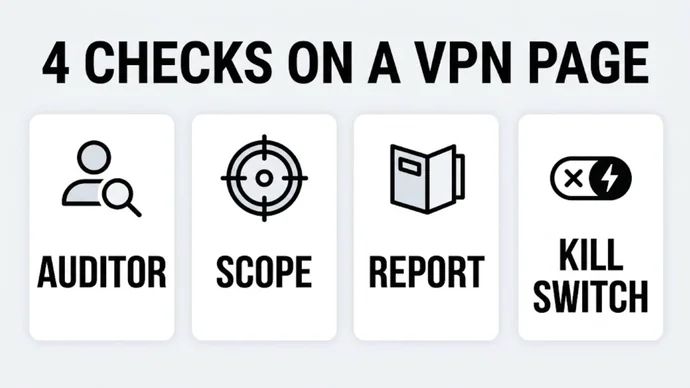
A VPN's own pages should prove 4 things: a named auditor, what that audit covered, whether you can read the report and a kill switch. A "no logs" line on its own is a claim, and the FTC tells shoppers not to rely only on an app's own promises about privacy.
A kill switch blocks your internet when the VPN connection drops, so your traffic does not fall back to your normal connection. This table shows what 4 VPN companies say on their own pages at the time of writing (October 2026), and each one proves its promises in its own way.
VPN
What its own pages say about audits
Kill switch
Proton VPN
Securitum audits its no-logs policy every year, five years in a row by 2026, including whether the policy applies across servers, regions and subscription tiers
Available in all of its apps, free plan included
Mullvad
Publishes infrastructure audits, and the full report of its fourth audit, by Cure53, is public
Always on, with an optional Lockdown mode that also blocks the internet when you disconnect
ExpressVPN
KPMG examined its privacy policy claims and server technology in 2025, and the full report opens after you accept KPMG's terms
On by default on Windows, macOS, Linux and Android, and always on in the iOS app
Surfshark
Deloitte's no-logs reports sit in your Surfshark account, while its SecuRing infrastructure report and Cure53 summaries are public
Soft and Strict modes, switched on in Settings
Read what each audit covered, not only the logo. Mullvad's public report says the auditors tested one OpenVPN server and one WireGuard server, so an audit is a snapshot of what was examined and not a promise about every server.
Four things a VPN's own pages should prove
Section 03
Which VPN server should you pick?
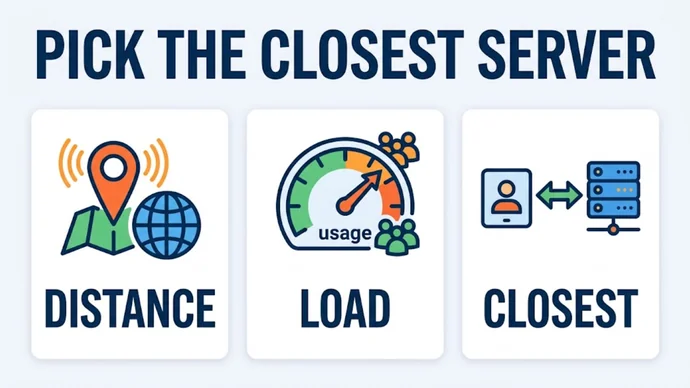
Pick the server closest to where you are, because Proton says the extra distance your data travels is the biggest factor in a slow VPN connection. A crowded server can slow everyone on it, so a close server with room to spare is the one to look for.
On Proton's free plan the app picks for you. At the time of writing (October 2026), it connects you to the fastest free server for your location, and when you switch, it picks the next server for you at random. The table below sorts 3 choices.
Choice
Pick it when
Keep in mind
Closest server
You want the best speed for a normal night
A busy server is slower, so try another close one
Automatic pick on Proton's free plan
You use that free plan and want the fastest free server for your location
Switching gives a random server, and you wait 45 seconds before the next switch and 10 minutes before each one after that
Server in another country
You run a DNS leak test, where Proton says a different country makes a leak easier to spot
The connection is slower, so go back to the closest server afterward
Choosing a server is about speed, and it does not change which rules apply to you. The legal section below covers that.
Distance and server load decide how fast a VPN feels
Section 04
What are the real risks of a free VPN?
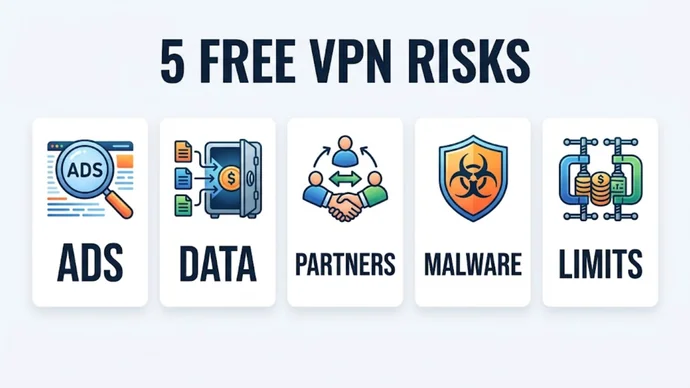
The real risks are ads, sold data, shared details, malware and tight limits. The FTC says many VPN apps are free because they sell advertising inside the app, and others share user data with third parties.
Proton, which also runs a free plan, lists 5 ways a free VPN can make money. The table pairs each one with a check, based on the FTC's advice.
Risk
What it means for you
What to check
Ads in the app
The app earns from ads, and some share your data to personalize them
Read the privacy policy for sharing with advertisers
Sold browsing history
Some track what you browse and sell that history
Look for any line about data brokers or third parties
Shared sign-up details
Some sell names and email addresses to partner companies
Find out which company owns the app
Malware
Some secretly install spyware or ransomware
Research the developer and read outside reviews first
Tight limits
Free tiers cap features, speed or data to push you toward a paid plan
Read the limits before you rely on it for the night
A VPN app can intercept all of your traffic, so check the permissions it asks for on your phone. The FTC says to ask whether a permission such as reading your text messages makes sense for a VPN app. For fewer ads and pop-ups on the sites themselves, blocking porn ads in your browser in 5 minutes covers the browser side.
A free plan can also be the generous kind: Proton funds its free plan with its paid plans, and at the time of writing (October 2026) its free plan page lists no data or speed limits, no ads, 1 device and the kill switch, and says the plan does not log your online activity.
Five ways a free VPN can make money, and what each means for you
Section 05
How do you set up and use a VPN in 5 steps?
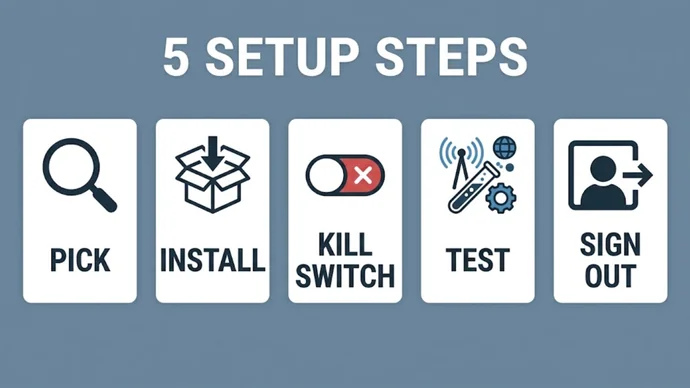
You set up and use a VPN in 5 steps: pick it, install it, turn on the kill switch, test it and use the closest server, then end the night in order.
The 5 Steps
Pick a VPN whose own pages pass the 4 checks: a named auditor, what it covered, a report you can read and a kill switch.
Install the app and read its permissions: the FTC says a VPN app can intercept all of your traffic, so grant only access that fits a VPN.
Turn on the kill switch before you connect: it blocks your internet if the VPN drops. Proton's Standard mode reacts to an accidental drop, and its Advanced mode, on Windows, the Linux app and (in beta) iPhone and iPad, also blocks traffic after you disconnect on purpose.
Run a DNS leak test, then use the closest server: connect to a server in another country, open DNSleaktest.com and run the standard or extended test. If the result shows your real internet provider, you have a leak. Then switch to the closest server for the night.
End the night in order: sign out of the site, then disconnect the VPN.
Proton says custom DNS settings and encrypted DNS can override its leak protection, so leave those at their defaults in its app while you test.
Which mistakes cost the most?
5 mistakes cause most of the trouble. This table pairs each one with the fix.
Mistake
Do this instead
Connecting before the kill switch is on
Turn it on first, so a dropped connection blocks your traffic
Trusting "no logs" without a named auditor
Run the 4 checks on the VPN's own pages
Changing the VPN app's DNS settings without testing
Run the DNS leak test again after any DNS change
Installing a free app without reading its permissions
Skip any app that asks for access a VPN does not need
Using a VPN is legal in the US, according to Surfshark's legal guide. A VPN does not make legal what was not legal before, though: the same guide says to use a VPN only for lawful activities, and that a VPN can break a service's terms and get your account restricted.
Age verification is where VPN-specific rules have started to appear: Surfshark's guide, updated in September 2026, calls Utah's SB 73 the first US state law to directly target VPN use for bypassing age checks. This article is about privacy on your own connection, and it does not cover getting around an age check. For what each state requires of porn sites, see which states block or age-verify porn sites.
What a VPN Does Not Change
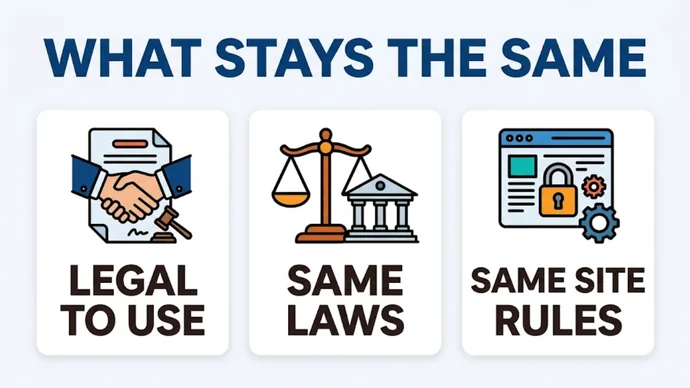
The laws that apply to you, the rules of the site you open and the terms of the VPN service stay the same with a VPN on. It changes who can see the content of your traffic, not the rules.
A VPN is legal to use, and it changes none of the rules that apply to you
Section 07
Frequently Asked Questions
Does a VPN make watching porn anonymous?
No. The FTC says a VPN generally will not make you entirely anonymous: it shifts trust from your provider to the VPN company, and a site can still recognize you through what you share, such as an account email.
Can my internet provider see porn sites if I use a VPN?
A VPN typically hides the content of your traffic from your provider, so what it sees is a connection to the VPN. A DNS leak is the exception, because the lookups that escape reach your real provider, which is why step 4 runs the test.
Does a VPN change an age check?
No. A VPN does not change what a law asks of a site. What Texas HB 1181 changed explains what the law requires and what the sites that stayed ask for.
Is a free VPN safe for porn?
Start with the privacy policy, the permissions the app asks for and the 4 checks on its own pages. The FTC notes that many free VPN apps earn money from ads inside the app, so a free plan without ads, like Proton's, is the kind to look for.
Will a VPN hide what I pay for?
No. A VPN covers your connection, not your card, so a charge still shows on your statement. How to pay for OnlyFans discreetly shows what each payment method puts on a statement.
Section 08
Key Takeaways
A VPN hides the content of your traffic from your provider and public Wi-Fi, and 4 checks, 1 closest server, 5 free VPN risks and 5 steps to set it up and use it help you get the most from it.
Remember
Know the limit: your provider and public Wi-Fi lose sight of the content, while the VPN company and the site you open do not.
Check the page: a named auditor, what it covered, a report you can read and a kill switch.
Pick the closest server, and be careful with free apps that earn from ads or your data.
Test, then sign out: kill switch on, DNS leak test run, signed out before you disconnect.
With your connection set, explore the top porn sites in the PornPlanner directory, grouped by category, and start your night.
US-based web developer and creator of PornPlanner.com. Every part of the site is built and maintained with usability, speed and reliability in mind — code first, hype never.
Curated by experts and updated regularly — our directory covers free porn tubes, premium porn sites, live cams, AI porn and dozens of other categories.